Aquamarine
Aquamarine's appeal is clarity and a cool, even blue. We grade colour under consistent light so lots compare fairly.
In short
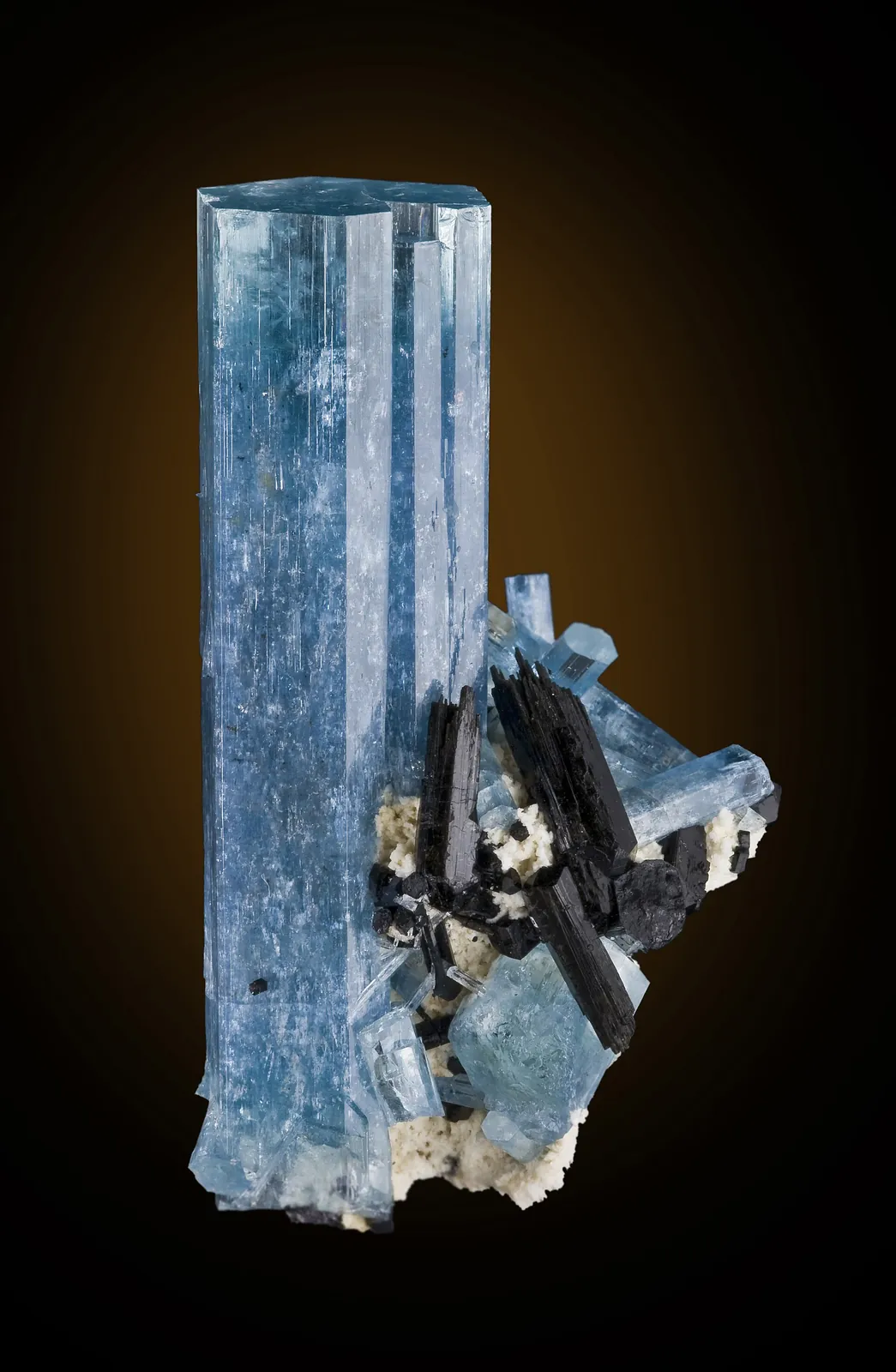
Aquamarine comes from pegmatite rock, is graded for colour and clarity, and sells as rough or display crystals.
- Formula
- Be₃Al₂Si₆O₁₈ (Fe)
- Density
- 2.7 g/cm³
- Hardness
- 7.5–8 Mohs
- Priced in
- Per carat or per specimen
What it is
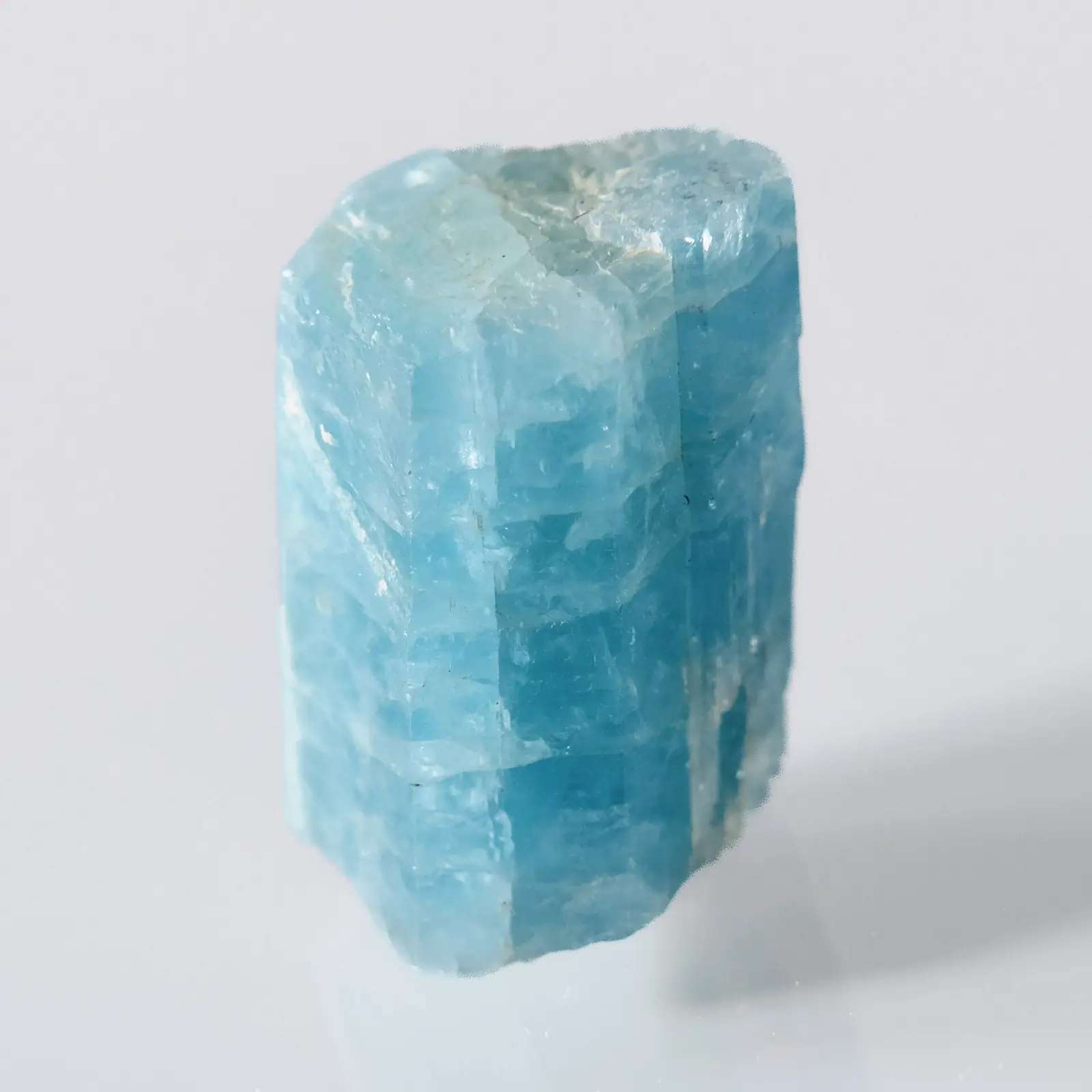
Aquamarine is the blue to blue-green variety of the mineral beryl, coloured by iron. It grows as large, clear, six-sided crystals. That makes it valued both as a cut gem and as a display specimen.
Supplied as
- Rough
- Crystals and specimens
Who buys it
- Jewellery
- Collector specimens
What we check before we sell
- 01Colour grading under standard light
- 02Treatment disclosure
- 03Origin documentation
From raw to refined
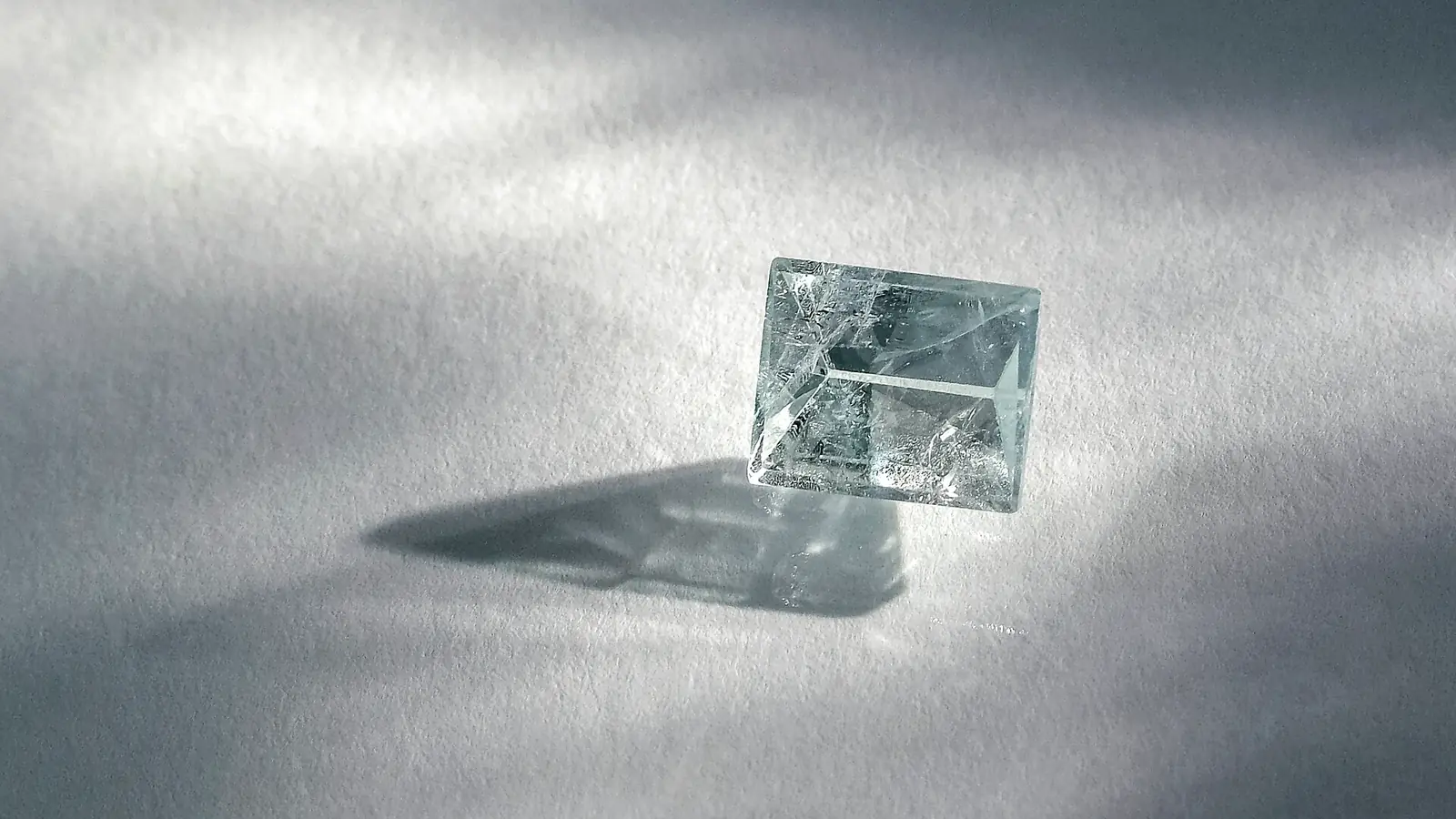
How aquamarine becomesa faceted aquamarine.
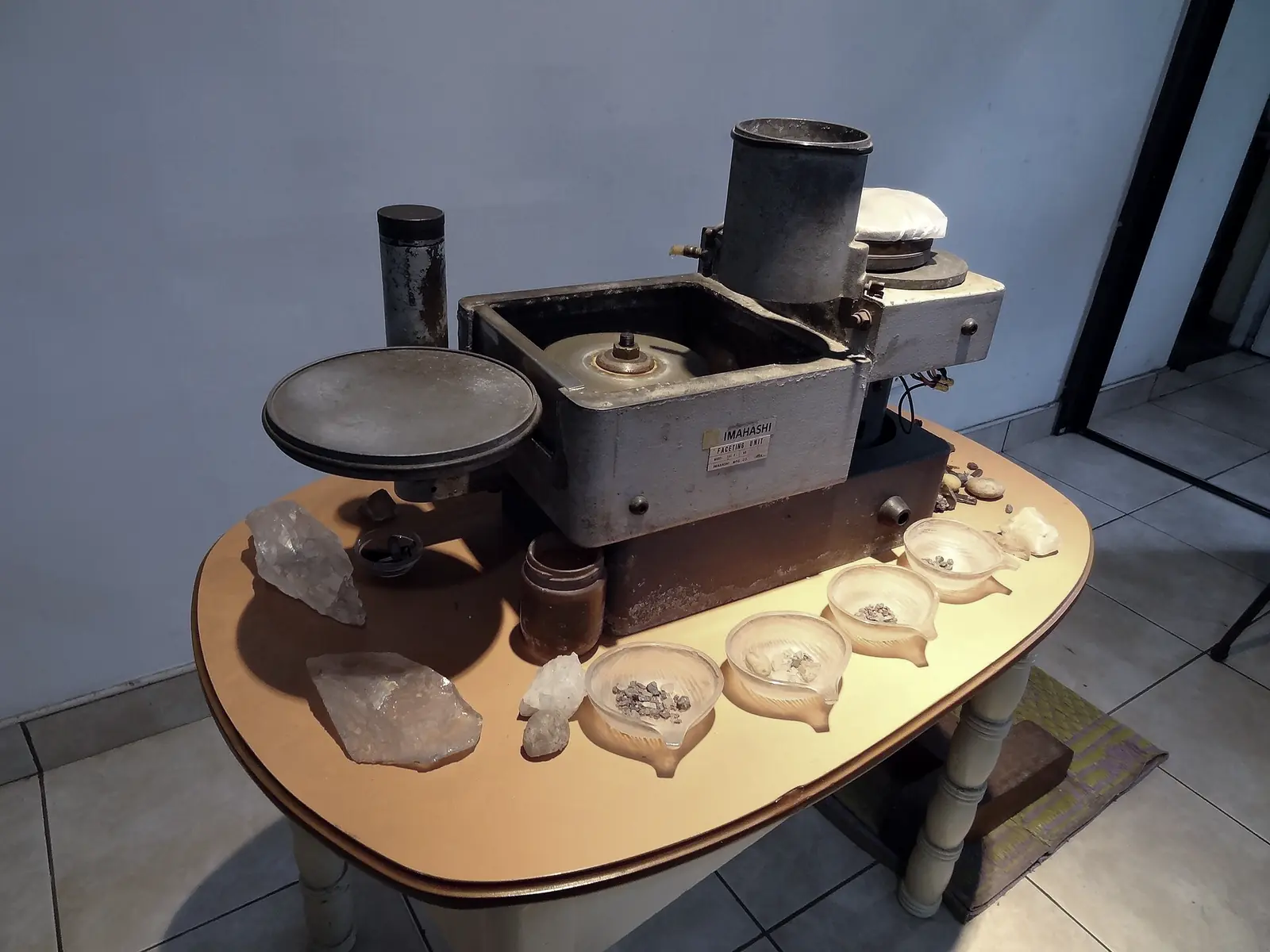
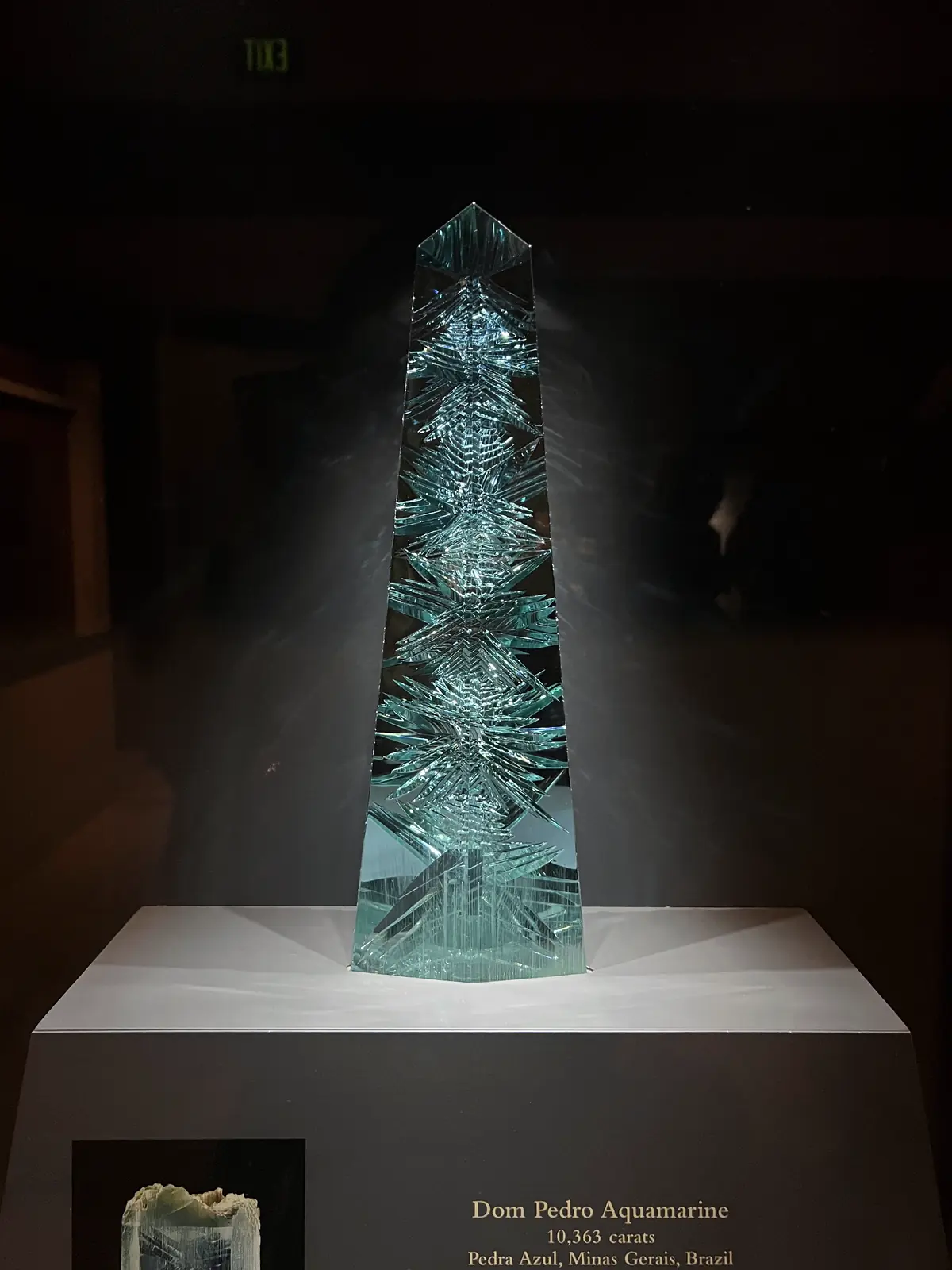
Follow aquamarine through 6 stages, from the moment it leaves the ground to the finished piece. Keep scrolling: each step has its own photograph or film.
Mine · Open workings
Pegmatite fields
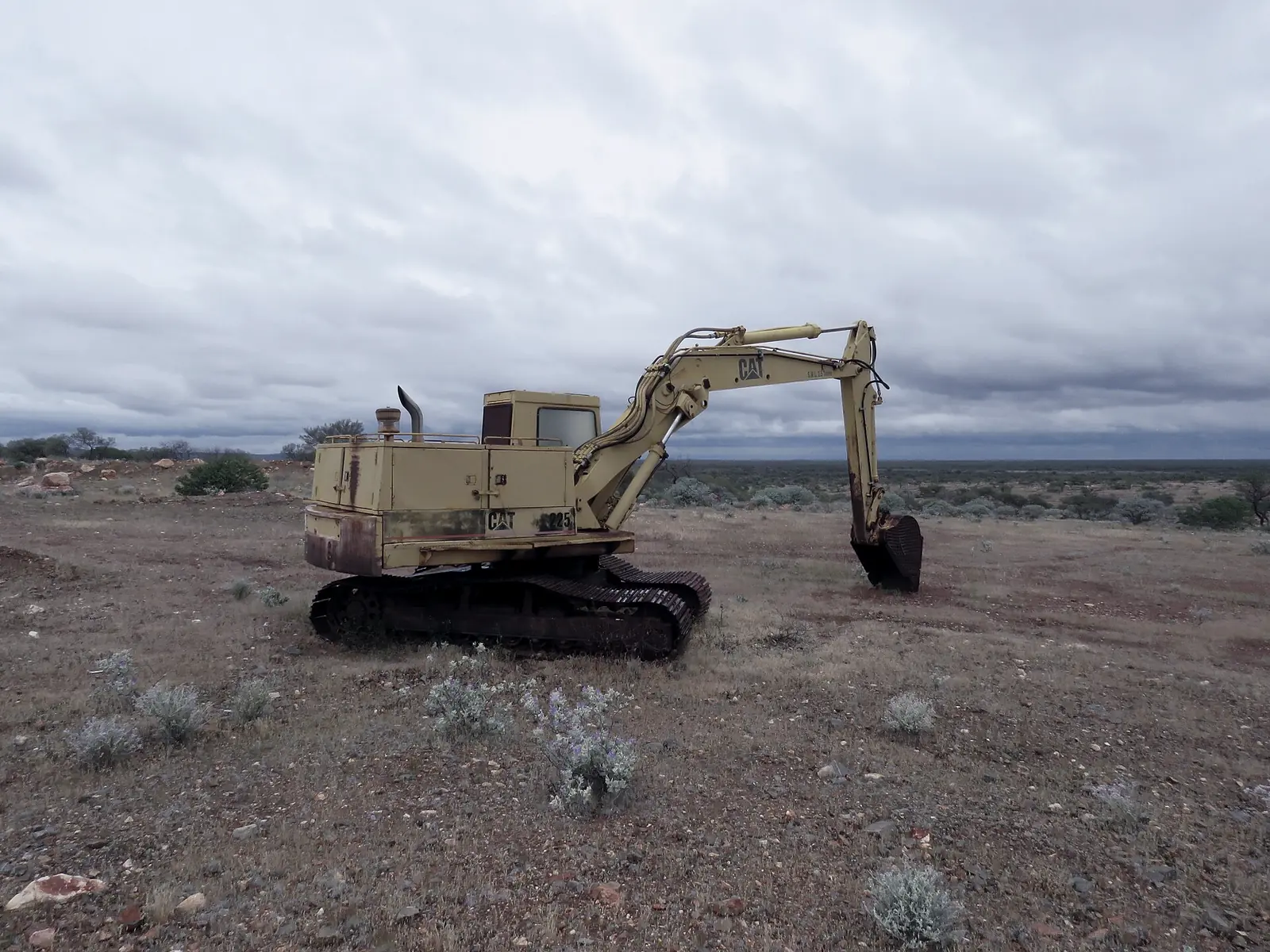
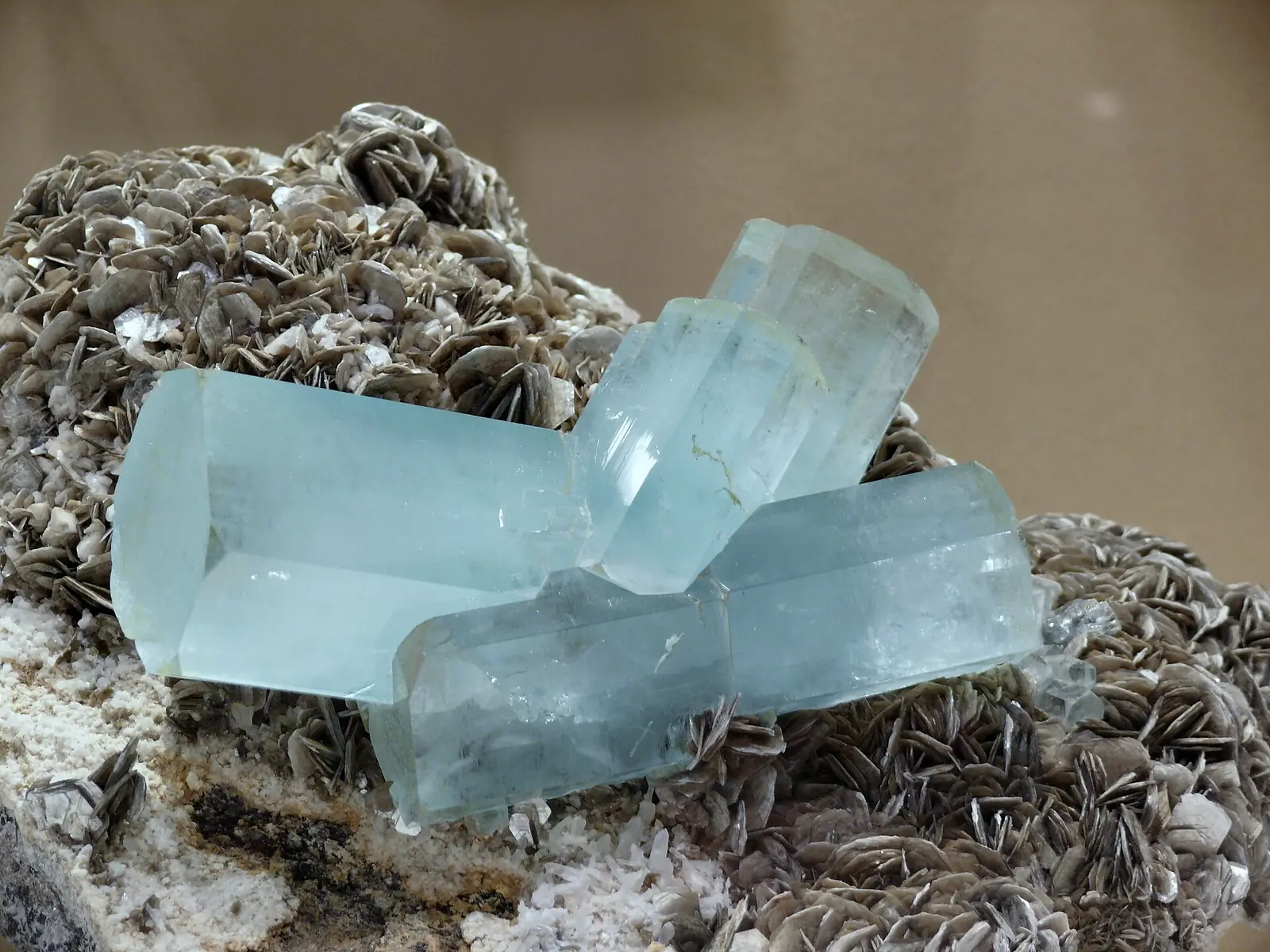
Aquamarine forms in pegmatite, often alongside mica, quartz and feldspar, and is mined from open cuts and small underground workings.
Next commodity
Mica